


Message from NICEATM and ICCVAM
On behalf of the Interagency Coordinating Committee on the Validation of Alternative Methods (ICCVAM) and the National Interagency Center for the Evaluation of Alternative Test Methods (NICEATM), we are pleased to present the 2024–2025 ICCVAM Biennial Progress Report.
Appropriate acceptance and application of new approach methodologies (NAMs) can reduce and replace animal use while improving public health protection. During 2024 and 2025, ICCVAM was central to the multifaceted efforts in scientific innovation, development of new approaches to validation, and critical evaluation of current test methods required to accomplish these goals.
The ICCVAM publication “Validation, Qualification, and Regulatory Acceptance of New Approach Methodologies” has become a key resource for the evaluation of NAMs since it was published in March 2024. Specifically, the principles articulated in this document are informing validation activities under the National Institutes of Health (NIH) Complement Animal Research in Experimentation (Complement-ARIE) program. Complement-ARIE will accelerate the development, standardization, validation, and use of human-based NAMs, and significantly advance the understanding of human health and disease by providing a range of ready and standardized biomedical research methods. To further encourage the application of these principles to toxicity testing, ICCVAM held its Method Developers Forum. This event was held in August 2024 and focused on approaches for identification of potential carcinogens.
While validation of new methods is key to their adoption, potential users have other needs that ICCVAM is actively addressing. The ICCVAM Consideration of Alternative Methods Workgroup gathered input to identify barriers to awareness and adoption of NAMs. Their review (Oyetade et al. 2025) identified key barriers to NAMs use and provides a roadmap for advancing NAMs adoption. One key need identified by the workgroup’s review, the creation of centralized repositories for NAM-related information, will be addressed by the Collection of Alternative Methods for Regulatory Application (CAMERA). Launched in 2025, this NICEATM resource is an interactive database and user interface that provides online access to information about methods that have been validated for specific regulatory purposes.
In addition to CAMERA, ICCVAM agencies continue to develop resources that provide high-quality data for method development and validation, as well as tools that help users from diverse backgrounds understand and use those data. This report describes data resources and computational tools developed by nine ICCVAM agencies that facilitate access and application of data to advance NAMs development and use.
ICCVAM also engages in collaborations to advance acceptance and harmonization of NAMs for chemical safety testing. ICCVAM members supported a wide range of activities within the Test Guidelines Programme of the Organisation for Economic Co-operation and Development, including co-leading the effort to revise Guidance Document 34 on validation and acceptance of new or updated test methods for hazard assessment. Other important collaborations over the last two years have occurred within working groups of the United Nations Globally Harmonized System for Classification and Labelling of Chemicals, the Health and Environmental Sciences Institute, the International Microphysicological Systems Society, and the International Liaison Group on Methods for Risk Assessment of Chemicals in Food.
We would like to acknowledge the contributions of the representatives and interagency workgroup members from the 18 ICCVAM member agencies, NICEATM and its contract staff, members of ICCVAM’s advisory committee, and our many other stakeholders. The current reporting period has been notable for the number of representatives that have left federal service to retire or pursue other opportunities. We thank them all for their service, in particular longtime agency representatives Moiz Mumtaz, Ph.D. (Agency for Toxic Substances and Disease Registry) and Joanna Matheson, Ph.D. (U.S. Consumer Product Safety Commission). We welcome the agency representatives that joined ICCVAM as new members during 2024 and 2025, and look forward to their active participation and new ideas.
The activities summarized in this Biennial Report exemplify ICCVAM’s ongoing commitment to working with U.S. and international partners to advance the development and acceptance of new scientifically valid test methods that will reduce and eventually replace animal use. These engagements, along with those of our many other stakeholders, are vital to ICCVAM, and we look forward to continued progress and effective interactions in the coming years.
Suzanne Fitzpatrick, Ph.D., DABT
Co-Chair, ICCVAM
Human Foods Program
U.S. Food and Drug Administration
Natalia Garcia-Reyero Vinas, Ph.D., DABT
Co-Chair, ICCVAM
Office of Chemical Safety and Pollution Prevention
U.S. Environmental Protection Agency
Helena Hogberg-Durdock, Ph.D.
Director, Division of NICEATM
Office of Research Innovation, Validation, and Application (ORIVA)
Office of the Director, National Institutes of Health
Warren Casey, Ph.D., DABT
Director, ORIVA
Office of the Director, National Institutes of Health

ICCVAM Co-Chair Suzanne Fitzpatrick, Ph.D., DABT
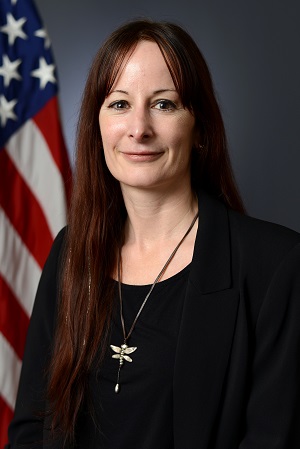
ICCVAM Co-Chair Natalia Garcia-Reyero Vinas, Ph.D.

NICEATM Director Helena Hogberg-Durdock, Ph.D.

ORIVA Director Warren Casey, Ph.D., DABT